

Sewage sludge analysis
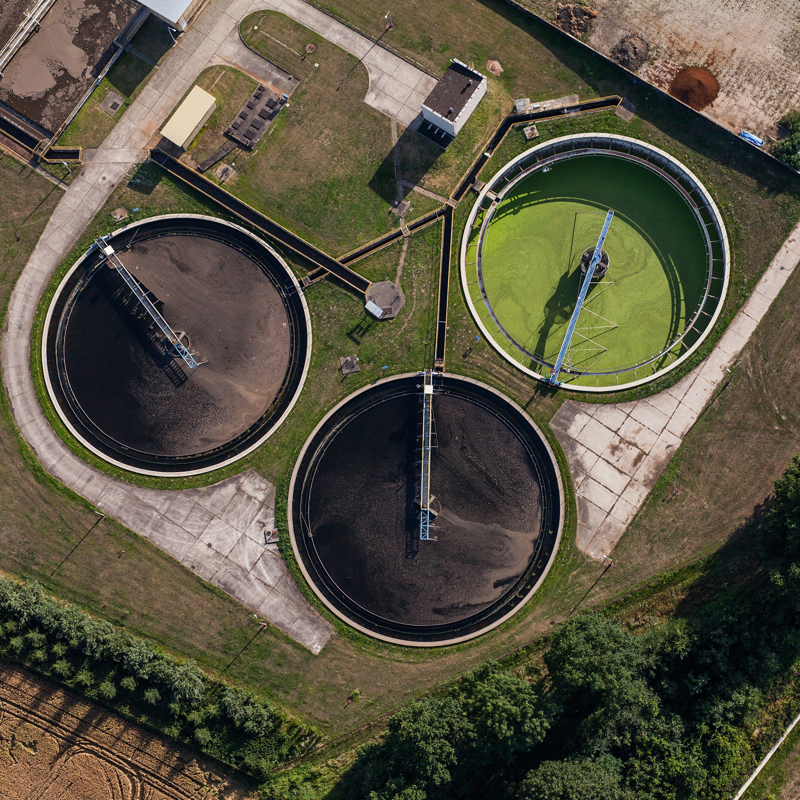
RPS provides analysis of priority pollutants and emerging substances in wastewater treatment sewage sludge and biosolids applied to land.
Analysing sewage sludge and biosolids
RPS has been providing analysis of trace contaminants in these challenging matrices to map the distribution of key pollutants and emerging substances. We've done this for a number of high profile research studies, including the UK Chemicals Investigation Programme (CIP3/4) and the Environment Agency’s Anti Microbial Resistance (AMR) pilot programme, as well as for a number of water companies and the UKWIR sponsored sludge investigations project.
Sewage sludges are by their nature, difficult matrices to analyse. With high levels of organic materials present and fibrous composition of the samples, there is a need to recover trace amounts of target analytes without any losses in preparation, extraction and clean-up stages. This requires a high level of expertise, which we have built up over many years of testing these types of samples, from our state-of-the-art laboratories in the UK.
The reuse of sewage sludge and biosolids as soil improvers in agriculture is not a new practice. However, there has been heightened interest in determining the potential impact from the release of emerging contaminants and priority pollutants. This has put them under more scrutiny and it is important that they are analysed to assess the likelihood of these chemicals entering, via this pathway.
PFAS Biosolids Analysis
Analysis of PFAS in biosolids has become a key focus area in environmental monitoring and understanding PFAS concentrations is critical for assessing risks associated with land application, disposal and recycling practices.
We have developed a targeted method to detect 54 PFAS compounds in one analysis and can add an additional 2 accredited fluorotelomer phosphate diesters 8:2 and 10:2 diPAP on request, to help our clients meet regulatory requirements and to make informed decisions regarding their environmental management strategies.
PFAS sampling differs from routine sampling due to the potential of cross contamination. Our team of samplers brings expertise and a proven track record of providing nationwide sampling for monitoring programs like CIP4, the biosolids assurance scheme and the UKWIR biosolids research program. We have a wealth of experience in sampling across trade effluents, road manholes, sewage treatment works both for incoming crude in process samples and final effluent and sludge cake as well as sampling surface water, groundwater and sediments.
Our PFAS 54 + 2 testing suite
We can provide ISO/IEC17025 accredited PFAS analysis in biosolids, as well as in many other matrices. With our UKAS accreditation, we are equipped to delve deeper into understanding and monitoring these compounds, ensuring the safety of our environment and communities.
We are also able to provide more indicative analysis to identify the total PFAS loading of a sample either by doing TOP Assay or using our state-of-the-art Combustion Ion Chromatography (CIC) instrument to perform Total Organic Fluorine, Total Fluorine, Inorganic Fluorine, Extractable Fluorine and Adsorbable Fluorine. Our laboratory is equipped with 14 LC-MS/MS systems and one high resolution accurate mass Orbitrap system giving us unparalleled capacity which is further enhanced by our latest addition of automated PFAS sample extraction systems.
PFAS 54 +2 testing suite
The UK drinking water inspectorate as of the 31st December 2021 requires that all drinking water is monitored for a list of 48 PFAS compounds in order to gather further information on their levels and prevalence in UK supplies. RPS has developed a targeted method to detect 54 PFAS compounds in one run, and can add an additional 2 accredited fluorotelomer phosphate diesters 8:2 and 10:2 diPAP on request, to assist water companies and private supplies to meet this new regulatory requirement and have been granted UKAS accreditation for 48 of these PFAS at sub-nanogram levels in ground water, surface water, drinking water (non-regulatory), untreated sewage and treated sewage effluent.
List of 54 PFAS included in the standard analysis suite
|
Abbreviation |
Description |
CAS Reg No |
|
PFBA |
perfluoro-n-butanoic acid |
375-22-4 |
|
PFPeA |
perfluoro-n-pentanoic acid |
2706-90-3 |
|
PFHxA |
perfluoro-n-hexanoic acid |
307-24-4 |
|
PFHpA |
perfluoro-n-heptanoic acid |
375-85-9 |
|
PFOA |
perfluoro-n-octanoic acid |
335-67-1 |
|
PFNA |
perfluoro-n-nonanoic acid |
375-95-1 |
|
PFDA |
perfluoro-n-decanoic acid |
335-76-2 |
|
PFUnDA |
perfluoro-n-undecanoic acid |
2058-94-8 |
|
PFDoDA |
perfluoro-n-dodecanoic acid |
307-55-1 |
|
PFTrDA |
perfluoro-n-tridecanoic acid |
72629-94-8 |
|
PFTeDA |
perfluoro-n-tetradecanoic acid |
376-06-7 |
|
PFHxDA |
perfluoro-n-hexadecanoic acid |
67905-19-5 |
|
PFODA |
perfluoro-n-octadecanoic acid |
16517-11-6 |
|
PFBS |
perfluoro-1-butanesulfonic acid |
375-73-5 |
|
PFPeS |
perfluoro-1-pentanesulfonic acid |
2706-91-4 |
|
PFHxS |
perfluoro-1-hexanesulfonic acid |
355-46-4 |
|
PFHpS |
perfluoro-1-heptanesulfonic acid |
375-92-8 |
|
L-PFOS |
perfluoro-1-octanesulfonic acid |
1763-23-1 |
|
br-PFOS |
perfluoro-1-octanesulfonic acid |
|
|
PFOS Sum L and br |
perfluoro-1-octanesulfonic acid |
|
|
PFNS |
perfluoro-1-nonanesulfonic acid |
68259-12-1 |
|
PFDS |
perfluoro-1-decanesulfonic acid |
335-77-3 |
|
PFUnDS |
perfluoro-1-undecanesulfonic acid |
749786-16-1 |
|
PFDoDS |
perfluoro-1-dodecanesulfonic acid |
79780-39-5 |
|
PFTrDS |
perfluoro-1-tridecanesulfonic acid |
791563-89-8 |
|
PFECHS |
perfluoro-4-ethylcyclohexanesulfonic acid |
646-83-3 |
|
HFPO-DA/GenX |
2,3,3,3-tetrafluoro-2-(heptafluoropropoxy)propanoic acid |
13252-13-6 |
|
HFPO-TA |
perfluoro-2,5-dimethyl-3,6-dioxanonanoic acid |
13252-14-7 |
|
DONA |
dodecafluoro-3H-4,8-dioxanonanoic acid |
919005-14-4 |
|
PFMPA |
perfluoro-4-oxapentanoic acid |
377-73-1 |
|
NFDHA |
perfluoro-3,6-dioxaheptanoic acid |
151772-58-6 |
|
PFBA |
perfluoro-5-oxahexanoic acid |
863090-89-5 |
|
3:3 FTCA |
3-perfluoropropyl propanoic acid |
356-02-5 |
|
5:3 FTCA |
3-perfluoropentyl propanoic acid |
914637-49-3 |
|
7:3 FTCA |
3-perfluoroheptyl propanoic acid |
812-70-4 |
|
PFEESA |
perfluoro-(2-ethoxyethane)-sulfonic acid |
113507-82-7 |
|
F-53B Major |
9-chlorohexadecafluoro-3-oxanonane-1-sulfonic acid |
756426-58-1 |
|
F-53B Minor |
11-chloroeicosafluoro-3-oxaundecane-1-sulfonic acid |
763051-92-9 |
|
4:2 FTSA |
1H,1H,2H,2H-perfluorohexane sulfonic acid |
757124-72-4 |
|
6:2 FTSA |
1H,1H,2H,2H-perfluorooctane sulfonic acid |
27619-97-2 |
|
8:2 FTSA |
1H,1H,2H,2H-perfluorodecane sulfonic acid |
39108-34-4 |
|
10:2 FTSA |
1H,1H,2H,2H-perfluorododecane sulfonic acid |
120226-60-0 |
|
FBSA |
perfluoro-1-butanesulfonamide |
30334-69-1 |
|
FHxSA |
perfluoro-1-hexanesulfonamide |
41997-13-1 |
|
PFOSA |
perfluoro-1-octanesulfonamide |
754-91-6 |
|
N-AP-FHxSA |
N-(3-dimethylaminopropan-1-yl)perfluoro1hexanesulfonamide |
50598-28-2 |
|
N-MeFOSAA |
N-methylperfluoro-1-octanesulfonamidoacetic acid |
2355-31-9 |
|
N-EtFOSAA |
N-ethylperfluoro-1-octanesulfonamidoacetic acid |
2991-50-6 |
|
N-MeFOSA |
N-methylperfluoro-1-octansulfonamide |
31506-32-8 |
|
N-EtFOSA |
N-ethylperfluoro-1-octanesulfonamide |
4151-50-2 |
|
MeFOSE |
2-(N-methylperfluoro-1-octanesulfonamido)-ethanol |
24448-09-7 |
|
EtFOSE |
2-(N-ethylperfluoro-1-octanesulfonamido)-ethanol |
1691-99-2 |
|
6:2 FTAB |
carboxyMeDiMe-3-[[(tridecaFlOct)sulfl]amino]prop amm hydrox |
34455-29-3 |
|
6:2 diPAP |
bis[2-(perfluorohexyl)ethyl] phosphate |
57677-95-9 |
|
8:2 diPAP |
Bis[2-(perfluorooctyle)ethyl] phosphate |
678-41-1 |
|
10:2 diPAP |
Bis[2-(perfluorodecyl)ethyl] phosphate |
1895-26-7 |
Extended Fluorotelomer Phosphate Diesters suite (needs to be requested separately
Our expertise
RPS can offer a wide variety of analysis in these matrices from routine inorganics and heavy metals all the way though to very complex organics such as:
- PFAS
- Antimicrobials and pharmaceuticals
- Steroids
- Phthalates
- PAHs, PCBs, PCNs, PCTs
- Dechloranes
- Siloxanes
- Chlorinated paraffins
- PBDEs
- Pesticides
Related research
The National CIP 2020-21 Chem 7 Sludge Chemical Analysis
The United Kingdom Water Industry Research Chemical Investigations Programme is intended as a means of gaining a better understanding of the occurrence, behaviour, and management of trace contaminants in the catchment. It is a monitoring programme of unprecedented scale and complexity and has been undertaken as a collaborative programme by water companies in England, Wales and Scotland and the respective national regulators.
An initial phase made it possible to prioritise substances for which regulation had been introduced this was carried out between 2010 and 2013. The second phase (CIP2) carried out between 2015 and 2020 focussed on quantifying compliance risk, at a site-specific level, in order that appropriate and justifiable remedial action could be taken.
One area of interest throughout the CIP has been the mechanisms of removal of substances from the received wastewater and the potential for treatment processes to partition substances into the sludge.
The Chem 7 Driver was developed to further investigate the presence or absence of substances in the biosolids. Although some previous limited investigation had been performed in CIP2, this new study increased the number of sites and significantly increased the number and types of substances investigated. 200 samples were originally collected over a 12 month period from 10 water companies in England and Wales followed by a further 20 samples from Scotland. The samples were analysed by RPS for 167 substances derived in collaboration between UKWIR and the Environment Agency generating 36,740 individual data points. This analysis was selected to compliment the work carried out on the Chem 11 (substance removal by installed technologies) and Chem 12 (mechanisms of removal) programmes in order to develop a more comprehensive understanding of the fate of chemicals within waste water treatment systems.
Outputs from this work will be published by UKWIR and available here, when ready
Anti-microbials in sewage sludge
Following on from the work conducted on the CIP3 Chem 7 programme RPS were commissioned by the UK Environment Agency to carry out analysis of 200 biosolids for the presence of antimicrobials chemicals to broaden the understanding on environmental antimicrobial resistance this has now followed on to monitoring a range of chemicals in UK rivers with ongoing monthly catchment monitoring for a wide list of chemicals examples of which have been included below.
Compounds we analyse
Antibiotics
- Phenoxymethylpenicillin (penicillin V)
- Piperacillin
- Amoxicillin
- Benzylpenicillin (penicillin G)
- Flucloxacillin
- (Piv) mecillinam Amorolfine
- Tazobactam
- Trimethoprim
- Clavulanic acid
- Ciprofloxacin
- Streptomycin
- Meropenem
- Ceftriaxone
- Ofloxacin
- Metronidazole
- Azithromycin
- Erythromycin
- Clarithromycin
- Lymecycline
- Doxycycline
- Minocycline
- Tetracycline
- Oxytetracycline
- Sulfamethoxazole
Antifungals
- Nystatin
- Terbinafine
- Griseofulvin
- Climbazole
- Clotrimazole
- Ketoconazole
- Miconazole
- Myclobutanil
- Triticonazole
- Fluconazole
- Tebuconazole
- Itraconazole
- Posaconazole
- Enilconazole also known as imazalil.
- Voriconazole
- Flucytosine
Herbicides
Clomazone
Broad spectrum anti-bacterial and fungicides
- Triclosan
- Chlorhexidine
- Didecyldimethylammonium chloride (DDAC
- Benzalkonium chloride, also known as alkyldimethylbenzylammonium chloride and by the trade name Zephiran
- Silver
- Copper
- Zinc
Key contacts

Marco Lattughi
Operational Director - Analytical Services