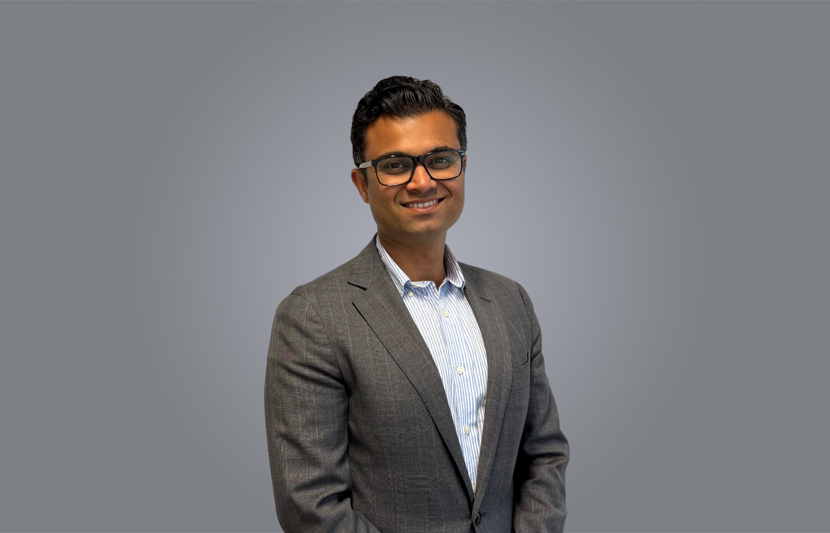
Vikas Sharma
Director - Management Consulting
No Content Set
Exception:
Website.Models.ViewModels.Components.General.Banners.BannerComponentVm

It’s a very exciting time at RPS. We are building a management consulting practice that genuinely reflects and supports where the public sector is heading. With the Government’s focus on responsible AI, data uplift and transformation, this is a pivotal moment where agencies need trusted partners who can help government organisations modernise systems and ways of working without losing their people along the way.
At RPS, we believe deeply in capability uplift and co-design. We’re here to help our clients navigate big shifts like AI enabled governance, but in a way that builds confidence, not anxiety. That alignment in values made joining RPS an easy yes.
And of course, the best part is that I get to work with individuals that I trust, who share the same values and vision of growth. And honestly, that’s what makes the work not just meaningful, but genuinely enjoyable.
In short, it’s about making “strategy to delivery” actually work in practice. A strong EPMO gives leaders confidence: clear priorities, clear decisions, and clear visibility of what’s working and what isn’t.
For me, practical EPMO advisory means designing systems and processes where people trust the data, trust the governance model and trust each other. And now with AI in the mix, that matters more than ever.
In my experience, most organisations don’t struggle with ideas; they struggle with alignment. Usually, the gap shows up in prioritisation, ownership, governance discipline, and team capability. AI adds another wrinkle: teams feel pressure to “do something with AI,” but without clarity, it can create confusion or siloed experiments.
My approach is to anchor everything in transparency and shared purpose. We help leaders set clear priorities, design governance that encourages disciplined decision making, and uplift the capability of teams. Getting everyone on the journey is the real unlock.
Three things: ownership, culture and continual advocacy. Fancy frameworks don’t survive unless the people using them feel they helped shape them. Co-design is everything.
And then there’s culture – this means transparency, accountability, and a shared idea of what “good” looks like. When leaders reinforce it and teams see value in it, the model becomes part of how the organisation works, not just a document on a shared drive.
Finally, the leadership needs to advocate for the EPMO, ensure it is empowered to engage and report independently and impartially across the portfolio. This empowerment uncovers gaps and insights that the senior leaders need and expect to hear.
Governance is ultimately about people. You can design a perfect model, but if leaders aren’t consistent or teams don’t feel confident, it falls apart fast.
Coaching plays a huge role. It builds confidence. Culture builds trust. Leadership creates psychological safety to try new tools like AI without fear of judgement or job insecurity.
I’ve seen teams transform simply because someone took the time to support them, give context, and help them build confidence. When leadership sets the tone and culture backs it up, governance becomes a natural part of delivery, not a chore.
“We’re here to help our clients navigate big shifts like AI enabled governance, but in a way that builds confidence, not anxiety. That alignment in values made joining RPS an easy yes.”
I keep it simple: capability uplift has to be done with people, not to them.
My approach is to demystify whether it’s a new tech, a new process or a change in strategic direction. Focus is on the ‘why’, the practical use cases, and embedding uplift into real delivery work rather than theoretical training.
When teams understand the benefits, feel supported, and see early wins, they move from anxiety to curiosity. And once curiosity kicks in, uplift becomes self-sustaining
Every organisation has its own language, so I focus on collaboratively developing practical frameworks and approaches, coaching teams through real problems (not just symptoms), and building confidence over time. The goal is always the same: help people feel more capable at the end than they did at the start.
We’ve got a mix of deep experience and grounded, sleeves up delivery approach. We combine hands on transformation experience with a intimate understanding of how public sector teams actually work. As a collective, we are driven by values of trust, integrity and humility – these values allow us to have genuine and open conversations with our clients – largely around what we can do (capability build) but more importantly what we will not do (an ongoing and unending engagement).
On top of that, RPS and Tetra Tech give us incredible capabilities across digital, engineering, analytics and more. When you’re tackling complex government challenges, that breadth is a huge advantage.
A few big shifts stand out. First, organisations want insights, not just reporting, real time data that actually helps them decide. Second, PMOs are shifting from data collectors to insight engines. AI is expected to accelerate analysis, but at the end of the day, only humans can truly infer meaning from information and that fact cannot be overstated.
And third, there’s a clear move toward lighter governance and stronger capability uplift. Organisations are investing as much in culture and capability as they are in systems.
Lastly, the shift towards Human centered transformation. Fear is the biggest barrier to adoption. Organisations that engage early, communicate the ‘why’ early, have patience and bring everyone along avoid the pitfalls that usually plague large transformations.
Habit: Ruthless clarity on priorities, owners, and decisions. Without context and clarity people fill the gaps with fear and resistance.
Pitfall: Assuming silence means agreement. If no one’s asking questions or providing comments, take a step back and dig deeper or frame your position differently.
Start with transparency. If you don’t have a clear picture of your portfolio, risks, or capacity, everything else becomes guesswork.
From there, focus on prioritisation, disciplined decision making, and building capability within your teams. When those foundations are strong, everything else (budgeting, resourcing, risk management) falls into place much more naturally.
Director - Management Consulting