
Matt Palmen
Technical Director - Strategy and Investment
No Content Set
Exception:
Website.Models.ViewModels.Components.General.Banners.BannerComponentVm

Growing delays in transmission infrastructure and associated Renewable Energy Zone (REZ) development make the mid-scale renewable sector a crucial yet underutilized lever, explicitly recognized in the Australian Energy Market Operator’s (AEMO) Integrated System Plan (ISP) as needing a larger role in achieving the government’s net zero target. However, it remains underdeveloped due to grid connection bottlenecks, financing challenges, fragmented offtake, and regulatory barriers.
A coordinated approach involving precinct-based procurement zones, a replicable finance model, regulatory fast lanes, grid-first deployment protocols and an equitable transition focus could unlock mid-scale renewables at scale. If implemented, this strategy could activate gigawatts of sub-30 MW renewable and hybrid capacity, accelerate emissions reduction, and deliver localised economic benefits across Australia.
Australia has made strong progress in small-scale and utility-scale solar projects, which respectively accounted for around 26% and 14% of renewable electricity generation in 2022. Yet the mid-scale sector remains neglected, despite its potential to fill a strategic gap in the energy transition.
Mid-scale solar PV projects occupy a unique niche between small rooftop systems and large utility-scale farms, offering an important opportunity to diversify and decentralize Australia’s renewable energy portfolio. However, these projects often face distinct challenges, including significantly higher regulatory and grid connection requirements that begin at the 5 MW threshold, leading to “step changes” in development costs, timelines, and complexity compared to smaller installations. As a result, mid-scale projects frequently encounter barriers that limit their growth despite their strategic value.
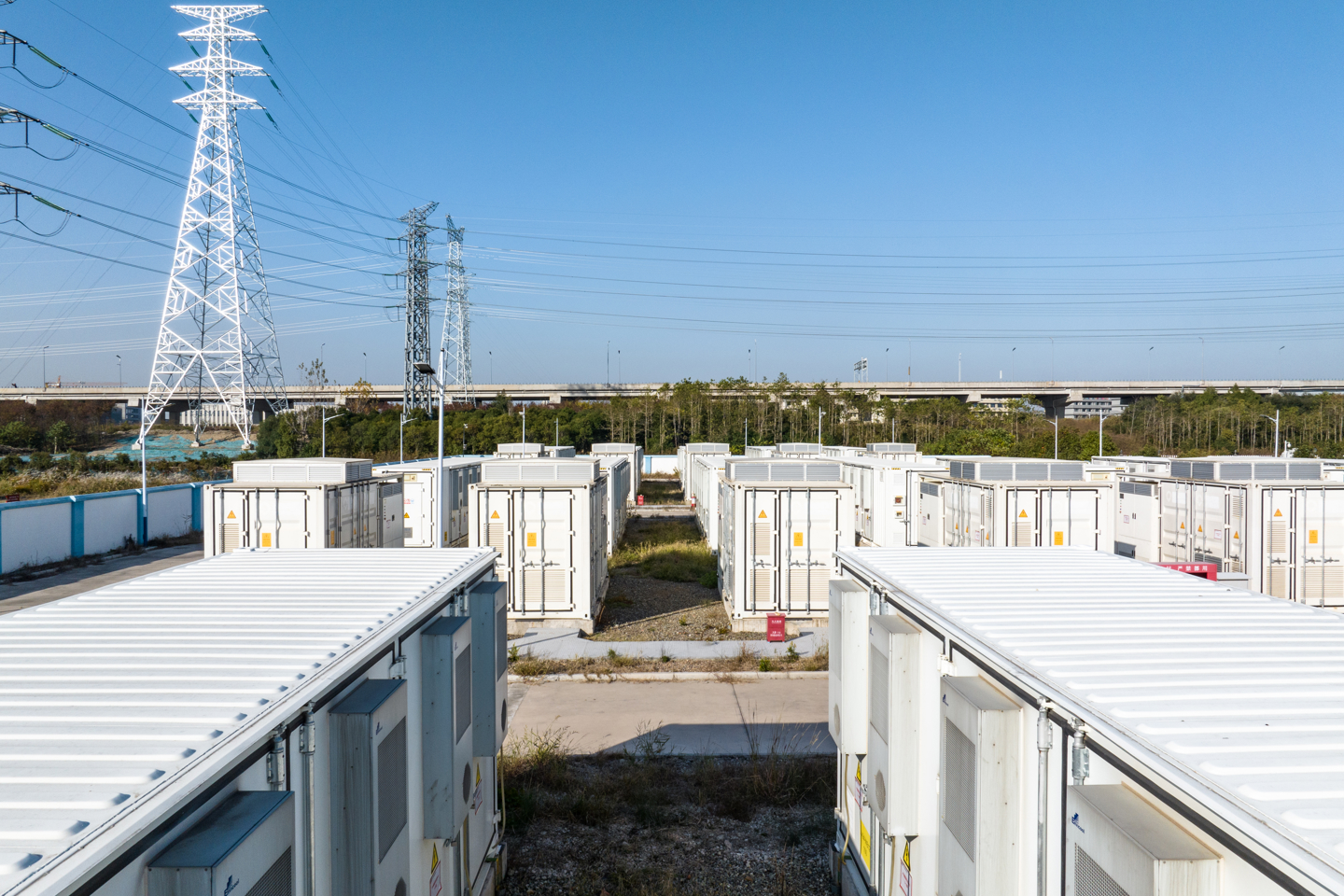
AEMO’s 2025 Electricity Network Options Report emphasizes the increasing role of localized battery storage and demand response as non-network options to relieve transmission delays. A key market gap exists in mid-scale Battery Energy Storage Systems (5-25 MW), driven by curtailment in sub-5 MW solar farms and export limits on distribution-connected residential, commercial, and industrial projects. These mid-scale BESS can capture otherwise curtailed generation and shift energy use to peak periods, enhancing grid flexibility and strengthening the value proposition for distributed renewables.
While there is a growing pipeline of mid-scale projects across Australia, many are focused on commercial behind-the-meter generation exploiting rooftop and adjacent land availability. The mid-scale segment benefits from economies of scale compared to small systems but remains less common than either small-scale or large-scale projects, partly due to these regulatory and market hurdles, as well as rising construction costs. Addressing these constraints through tailored policies and innovative business models is critical to unlocking the significant untapped potential of the mid-scale market.
The Clean Energy Regulator has flagged mid-scale solar PV (100 kW to 30 MW) as a key growth area, but deployment remains sluggish due to opaque grid connection processes, fragmented buyer markets, and financing complexity. Notably, the Business Renewables Centre Australia (BRC-A) reported only two ‘mid-sized’ deals in 2024, sized 33 MW and 30.4 MW respectively.
At the same time, community energy organisations have collectively raised over $87 million for local projects, yet total installed capacity remains under 100 MW. This signals strong social licence and capital availability - but insufficient structural support. Germany’s Bürgerenergie (citizen energy) cooperatives and business and community solar programs in the United States have demonstrated how mid-scale models can enable community investment, reduce risk, and accelerate distributed deployment.
| Technology | Generation (GWh) | % of Renewable Generation | % of Total Generation | Equivalent Households Powered |
| Hydro | 16,537 | 19.70% | 7.10% | 3,598,082 |
| Wind | 29,892 | 35.60% | 12.80% | 6,503,905 |
| Solar PV (total) | 34,446 | 40.98% | 14.73% | 7,494,765 |
| Small-scale solar PV | 21,726 | 25.80% | 9.30% | 4,727,168 |
| Mid-scale solar PV | 980 | 1.20% | 0.40% | 213,173 |
| Large-scale Solar PV | 11,740 | 14.00% | 5.00% | 2,554,448 |
| Bioenergy | 3,181 | 3.80% | 1.40% | 692,177 |
| TOTAL | 84,056 | 100% | 35.90% | 18,288,953 |
Source: Clean Energy Council, 2023
Rather than pursuing isolated mid-scale single user projects, we propose developing localised precincts that aggregate demand from multiple energy users to anchor renewable supply. These users could include industrial parks, large retailers, agribusiness clusters, wastewater treatment facilities, local government operations, as well as residential communities. Such precincts could be located in industrial estates, airports, commercial areas, agricultural zones, or near community infrastructure where there is available land and access to distribution networks capable of accommodating additional generation.
A precinct aggregator would coordinate multi-buyer power purchase agreements (PPAs), allowing projects to scale beyond individual household or single-entity agreements. This aggregation model reduces credit risk, enhances bankability, and ensures that renewable generation aligns with local demand and grid capacity. Importantly, evidence shows that most community-led PPAs struggle to progress without the participation of institutional loads, which provide the stable and substantial demand needed to anchor projects effectively.
Mid-scale Renewable Energy Precincts (REPs) offer a distinct but complementary approach to state-based Renewable Energy Zones (REZs), such as the Illawarra REZ in New South Wales, which primarily support large-scale renewables connected to high-voltage transmission networks serving broad regional demand. The precinct model, on the other hand, focuses on mid-scale renewables - typically 3 to 30 MW - that connect within local distribution networks. By aggregating demand from multiple users within specific localities, this model leverages existing distribution infrastructure, reduces dependence on costly transmission upgrades, accelerates deployment, and enhances grid resilience by generating power closer to end-users.
The Goulburn community solar project raised $2.1 million to power up to 500 homes, demonstrating the potential of community-led initiatives. A precinct model that coordinates demand from multiple users could multiply this impact tenfold. Internationally, New York’s Community Distributed Generation (CDG) scheme exemplifies this approach by allowing multiple customers to subscribe to mid-scale solar farms, offering a successful model that could be adapted to Australia’s regional precincts.
| Feature | Renewable Energy Zones (REZs) | Renewable Energy Precincts (REPs) |
| Primary purpose | Coordinate generation and transmission investment | Aggregate demand and renewable supply in local precincts |
| Scale | Large-scale projects (typically > 50 MV) | Mid-scale projects (typically 3-30 MV) |
| Grid connection | Connected to high-voltage transmission network | Connected to local distribution networks |
| Geographic focus | Regional zones targeting broad demand centres | Localised areas like industrial parks, community hubs |
| Infrastructure needs | Often requires new transmission infrastructure | Leverages existing distribution infrastructure |
| Development timeline | Longer due to scale and transmission upgrades | Faster deployment due to smaller scale and local grid |
| Regulatory process | Typically state-level planning and approvals | Often local or regional approvals |
A key barrier to mid-scale deployment is the absence of standardised, replicable financial models. Unlike utility-scale projects that attract institutional investors, or rooftop installations that benefit from retail subsidies, mid-scale assets often sit in a financing "no-man's land."
We propose a six-part finance model:
Community and SME investment vehicles offering modest returns and local participation.
State-backed credit enhancements (e.g. partial guarantees) to unlock senior debt.
Standardised and pre-negotiated modular EPC/O&M contracts to lower diligence costs.
Aggregated insurance and compliance services to reduce soft costs and improve bankability.
Discounting of Distribution Use of System (DUoS) charges where project size can fulfill current and near-term future local demand.
Development of an energy trading mechanism that bundles multiple projects to offer large PPA opportunities to industrial consumers.
This model tackles key challenges highlighted in BRC-A’s 2024 market report and the Clean Energy Finance Corporation’s identified investment gaps. By standardising, aggregating, and modularising projects with strong offtake structures, it can improve project returns and reduce transaction overhead. Collectively, these improvements enhance project bankability and investor confidence, making mid-scale renewable projects easier to finance and successfully deliver.

Planning approvals and grid connection permits are major sources of delay. While necessary for community assurance, the current processes are not scaled for urgency. Grattan Institute and the Australian Energy Market Commission both highlight that bottlenecks in planning and connection are among the biggest threats to Australia’s 2030 target.
We propose a "Ready in 12" model – a 12-month regulatory fast lane for projects that:
Are under 30 MW
Are located on pre-identified low-impact parcels
Meet buffer and environmental criteria
Use grid-friendly technologies (e.g., BESS, dynamic export control)
Include provision of enabling infrastructure, such as access roads and other necessary site facilities.
Local councils and state governments would pre-zone land for renewable energy use where existing distribution capacity is available, streamline permitting processes, and allow developers to bypass full environmental reviews if certain criteria are met. Such an approach aligns with AEMO’s Connections Reform Initiative (CRI), which aims to streamline grid connection processes, increase transparency, and build industry capability to accelerate renewable energy integration and reduce project delays. The UK’s recent planning reforms for solar projects under 100 MW provide a useful precedent, enabling faster deployment without compromising environmental or community safeguards.
Grid congestion, distribution network constraints, and opaque connection processes managed by Distribution Network Service Providers (DNSPs) and Transmission Network Service Providers (TNSPs) are among the top deterrents for mid-scale investors. According to AEMO’s 2025 Network Options Report, enhancing distributed energy resources integration and increasing transparency of hosting capacity are key to avoiding costly grid congestion and curtailment risks associated with delayed transmission upgrades.
A "grid-first" approach prioritizes early and transparent consideration of network capacity and constraints across both distribution and transmission networks.
To do this, we propose
Mandatory publishing of distribution and sub-transmission voltage level (11 kV, 33 kV and 66 kV) feeder and substation-level hosting capacity maps by DNSPs, and by TNSPs where applicable
Grid triage for "fast lane" compliant projects
Digital twins in planning to test grid scenarios
Incentives for DNSP augmentation - and where relevant, TNSP augmentation - aligned with local demand and project scale.
This approach would not only accelerate project timelines but also support distributed resilience – a theme AEMO reinforces in its Network Options Report. The rollout of these projects will also help DNSPs and TNSPs avoid the need for large-scale network augmentation and expansion to meet growing local and regional demand.
The energy transition will disproportionately affect coal-dependent and industrial regions. Focusing mid-scale renewable energy projects in these regions would deliver not only clean power but also meaningful economic and social benefits, including:
Job creation: For a 30 MW facility, around 90 to 150 construction jobs and 5 to 10 ongoing jobs, emphasising trades, apprenticeships, and re-skilling opportunities for communities affected by industry transition
Skills development: Build local expertise in renewable energy installation, battery storage integration, and ongoing operations
Boost to local industry: Encourage local sourcing for construction materials, fabrication, civil works, and support services – keeping economic value within the region
Community empowerment: Provide pathways for community and small business co-investment, helping reduce energy costs for councils, SMEs, and residents
Grid benefits: Distributed energy assets placed near demand centres ease grid pressures, reduce energy losses, and lower risks of curtailment
Equitable transition: Support economic diversification and resilience in regions transitioning away from fossil fuels, creating a sustainable foundation for future prosperity
Energy and circular economy integration: Use renewable energy to produce biofuels, biomethane, and hydrogen from agricultural waste and wastewater, supporting decarbonization of diesel-powered equipment in agricultural and industrial regions
Improved reliability: Having generation closer to the local consumers can help provide reliable continuous supply, enhance energy security and shield from wider grid instability particularly in remote communities.
Prioritising the development of mid-scale renewables and their associated social, economic, and environmental benefits directly supports the Net Zero Economy Authority’s mission to facilitate an orderly and inclusive transition in the regions most impacted by the energy shift.
Australia cannot afford to overlook the mid-scale renewables sector. Recognizing that transmission delays will not simply be resolved in time, AEMO’s Integrated System Plan underscores the urgency of alternative approaches. By aggregating precinct-level demand, addressing project finance, streamlining approval processes, embedding grid intelligence from the outset, and prioritizing an equitable transition, we can elevate mid-scale renewables into a powerful, scalable solution.
This blueprint offers a clear pathway to unlock a new wave of regionally anchored clean energy, empowering communities and strengthening the networks that will drive Australia’s sustainable future. Initiatives and business models of this kind are needed to ease grid congestion, reduce renewable curtailment, and ensure a reliable electricity supply as Australia advances decisively toward net-zero emissions by 2050.
While technical, operational, and environmental challenges remain and will require continued innovation and collaboration, they are manageable and should not delay the advancement of this strategically important sector. Numerous global examples show that focused mid-scale clean energy projects can be successfully delivered and scaled to deliver broad economic and social benefits.
Technical Director - Strategy and Investment

Executive General Manager - Commercial and Infrastructure Delivery

Director - Strategy and Investment

Associate Director, Renewable Energy Commercial and Delivery Advisory