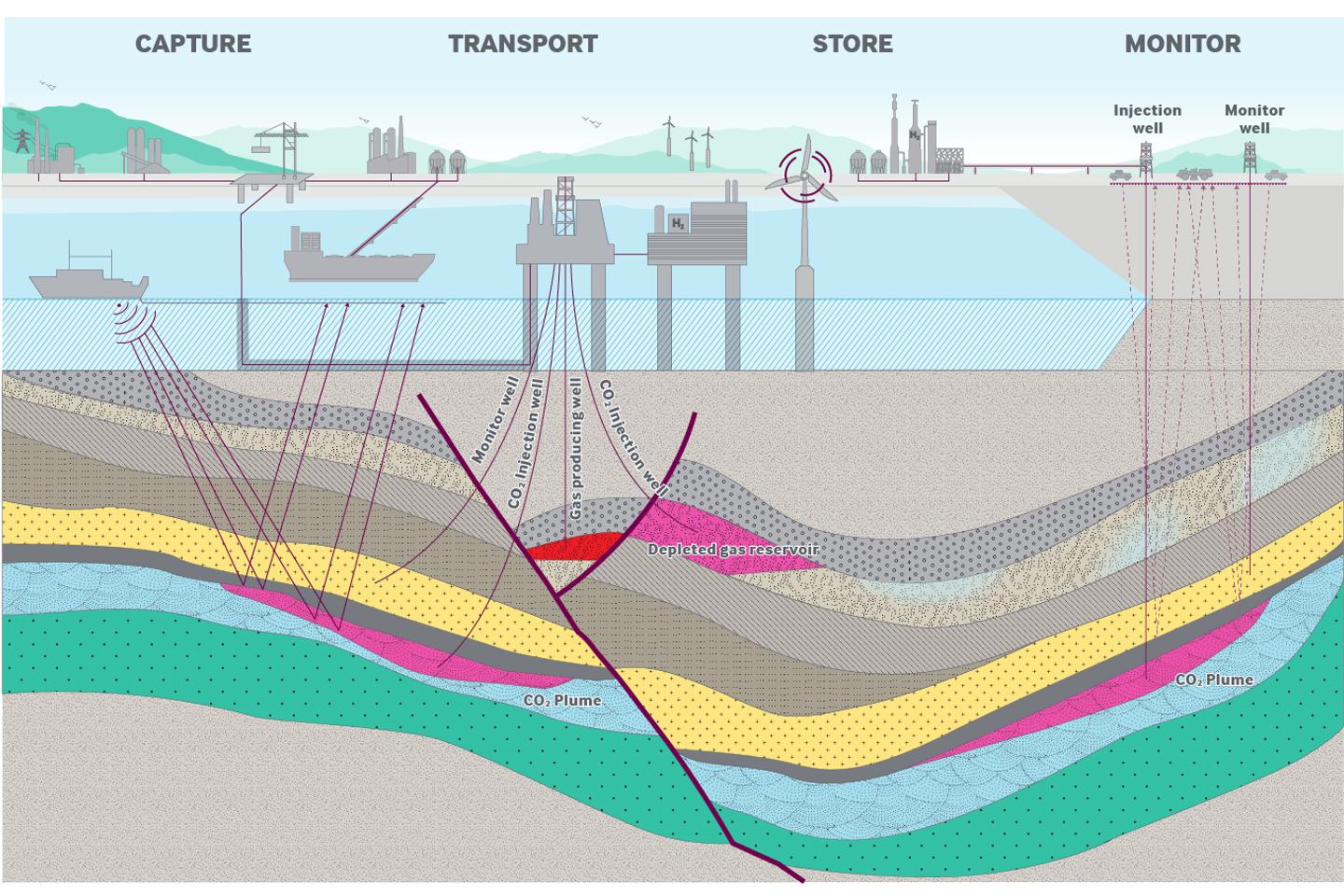
CCS: a new look at CO2 storage project misconceptions
After the Northern Lights project achieves a significant step, geoscientist David Pickering reflects on CCS timelines, terminology and other misconceptions.
15 September 2025 | 5 min read
David Pickering
The first CO2 injection at the Northern Lights project last month marked a significant step towards commercial storage – but this has been a journey of many years. In this article, I'll look at CCS timelines, terminology and other misconceptions.
Communicating project timelines and processes is still a work in progress for the emerging CCS industry. The terminology used may be familiar to subsurface specialists, but less so to investors, manufacturers in the so-called ‘hard-to-abate’ industries, and others where emissions are a concern. In my conversations with those groups, I’m regularly aware of misconceptions. Below, I delve into some of the most common ones.
First Eleven: some key ideas to understand when developing your project
1) Terminology: storage licences and storage permits
A carbon storage licence is in effect an exclusive right to explore / appraise acreage to assess its suitability for CO2 storage. However, this doesn’t mean that the operator has secured a storage permit, with the right to commence injection operations. That step comes several years later, and only once the operator can demonstrate to the regulator that the site is understood and is safe. (The nomenclature describing the licensing process varies between European countries, but the principles are roughly the same.)
2) Data: how much site characterisation is needed
After applying for a carbon storage licence, you enter the licence appraisal period and the work programme of investigations around site suitability. Both are there for a reason. Existing data coverage and quality varies, but all sites require further evaluation prior to the decision on whether to apply for a storage permit, regardless of any claims to the contrary. As such, the capital invested for the appraisal period carries risk as there is no guarantee of a storage permit at the end of it.
3) Expectations: speed of appraisal
Appraisal periods are typically three to six years, followed by a development period of two to five years on top of that. This means that acreage that’s currently unlicensed will not be available for storage prior to 2030. “Fast tracking” scenarios have been touted by some site developers, but any prediction of timelines should note that regulators are expected to take a very firm, “belt and braces” approach.
4) Commercial risk: high grading of sites
High grading a site as a destination for one's emissions is not simply a question of selecting from a catalogue. At this early stage of market development, the selection of one site over another is a road full of risk. Be wary of anchoring complex infrastructure investment decisions to one particular storage solution: most are not yet mature enough to make them the uncontested choice.
5) Geological: effects of neighbouring projects
Neighbouring or concurrent projects competing for the same aquifer may impact each other. At present, these effects may be underestimated by site developers, which could cause big headaches for projects at a later stage. Effects such as pressure interference could be felt at a significant distance, and different project types could also be affected (for example, a CCS project near a geothermal project). The work must be done to understand the effects on subsurface geology and to manage any potential conflicts between projects.
6) Expectations: storage size estimates
Some estimates being quoted may be less than realistic. They are certainly likely to confuse the uninitiated! It’s important to take guidance regarding these figures.
Large, unqualified, theoretical storage estimates will reduce dramatically once technical, operational and commercial constraints are overlaid on them. This is particularly apparent when stepping from high-level, static assessments into dynamic simulation of reservoir behaviour.
7) Expectations: guaranteed success with a chosen site
Some sites will fail. A few licences will not make the technical grade. If, for example, appraisal data identifies a flaw in the storage complex, the storage licence could be handed back without injection taking place. As such, the market doesn't yet have enough licensed acreage. Governments and legislators could support the growth of CCS by ensuring that additional acreage is made available to storage site developers where compensation for downgraded or rejected locations is needed.
8) Expectations: initial reservoir performance
In reality, CCS projects aren’t likely to come online at full storage capability from day one. Many will require a significantly phased approach to build confidence in the reservoir performance / behaviour. As investors and operators get comfortable with their levels of commercial risk, it’s helpful for projects to think bigger-picture and longer-term.
9) Data: assumptions about CO2 supply
Many sites are modelling uninterrupted CO2 injections, which is best to avoid reservoir damage. However, this assumes a flawless supply of CO2, i.e. logistical chains/infrastructure/hubs in place. This is a detail worth remembering when planning for different stages of the project: modelling and screening can make oversimplified assumptions, but evaluation of realistic development scenarios is needed.
10) Commercial risk: access to funds
Large firms with big balance sheets and existing lines of credit may be able to accommodate long durations, but other potential project developers could experience fundraising challenges. It’s important to plan for the knock-on effects around regulatory, appraisal, and development schedule and finance requirements.
11) Commercial and operational: co-venturing
Lastly, be aware that co-venturing is not “copy and paste” from traditional industries. At the scale of the storage facility and supply chain, there may be potentially unfamiliar partnerships, with quite different business models and attitudes to commercial risk.
Understanding project risk
CCS is an exciting space with the potential to support decarbonisation, and the Northern Lights project shows what progress can be made. It’s important, however, to have realistic expectations and the best information to hand.
In our capacity as a technical advisors, our team provides independent verification of subsurface project narratives. We help clients ensure sites are characterised appropriately and that project and commercial risks are explained.
If you would like to know more, feel free to contact me about we can help with subsurface technical evaluations and due diligence, including Competent Persons Reporting (CPR).
Related services