
Environmental permitting and compliance
Permitting services and advice to help you navigate environmental regulation and licensing requirements and develop sustainably.
No Content Set
Exception:
Website.Models.ViewModels.Components.General.Banners.BannerComponentVm

In July 2025, the Department for Environment, Food and Rural Affairs (DEFRA) published a policy paper titled “Reforming the Waste Exemptions System.” While discussions around reforming the waste exemption system have been ongoing for several years, this paper offers some additional, though limited, clarification on the proposed changes.
The UK’s Waste Exemption Regime is designed to offer businesses a practical way to manage certain low-risk waste activities without the complexity of a full environmental permit. This flexibility is granted as long as operations meet strict conditions designed to keep the activity safe and low impact.
The scale of this system is significant. As of 2024, the Exemption Register recorded over 416,000 waste exemptions in England alone. This clearly demonstrates how vital exemptions are in helping thousands of waste-related businesses stay compliant without triggering more onerous and costly permit requirements.
Due to the upcoming waste exemption reforms, some operators will no longer be able to rely on existing waste exemptions. Instead, they may need to obtain an environmental permit in order to continue their operations. For operators who remain under a waste exemption, stricter record keeping requirements will apply. Additionally, certain exemptions will see storage limits have been reduced, which could lead to operational adjustments on-site.
Operators moving from an exemption to operation under an environmental permit may need to make changes or upgrades to their site drainage, waste storage arrangements and other site infrastructure. These requirements may require capital investment or constrain operations. Operators need to budget for investment and review the viability of operations under applicable constraints.
These reforms could increase enforcement risk for operators that reply on exemptions. Some exemptions will be removed and facilities wishing to continue operating as “normal” will need to undertake permit applications within short transition windows. Early planning is essential to understand business implications. Operators should also be aware that the permit application process is likely to be longer in duration that the transition windows.
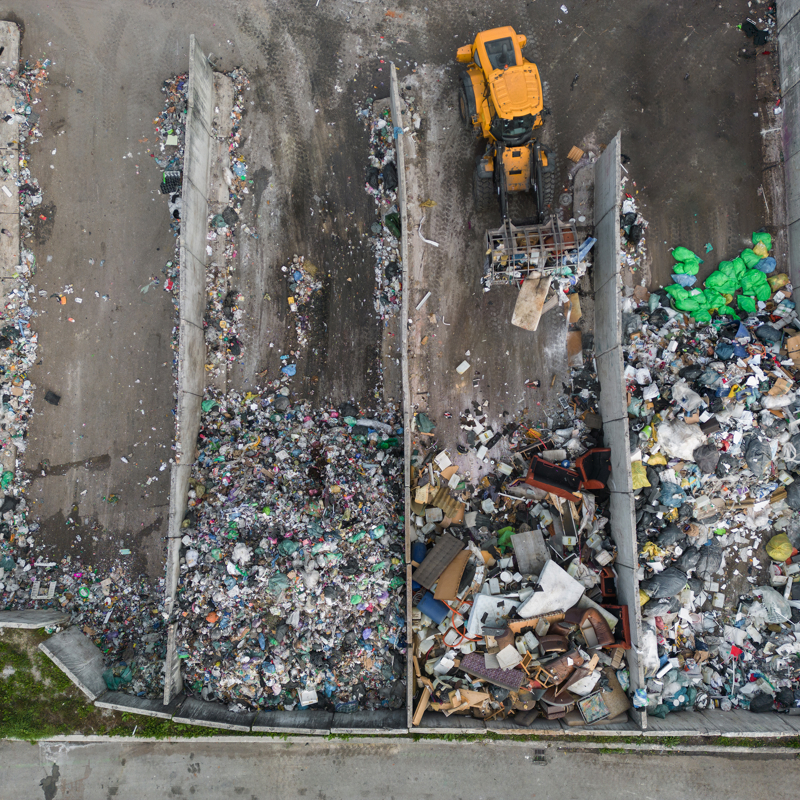
The proposed reforms to waste exemptions include several significant changes. Exemptions will no longer be permitted at sites that already hold an environmental permit, and only a single exemption can be registered at a single location. Waste operators will also face stricter requirements to record detailed information about their exemptions, ensuring greater transparency and accountability. In addition, technical updates to waste codes and conditions are being introduced to improve consistency across the system. Certain exemptions will be removed completely.
Exemptions that will have conditions changed are as follows:
The following exemptions will be removed:
No more waste exemptions at permitted sites
Under the new proposals, waste exemptions will no longer be permitted at sites that already hold an environmental permit, or at adjacent sites with a “direct link” to permitted operations. A direct link includes shared control, staff, equipment, or infrastructure between the exempt and permitted activities. This change is designed to keep risk assessments accurate and compliance clear.
If operators want to go beyond their existing permit conditions, such as handling new waste types or increasing volumes, they will need to apply for a permit variation rather than relying on exemptions.
Clarifying storage limits and multiple exemptions
Currently, multiple waste exemptions can be registered at a single site, but this often creates a complex risk profile. To tackle this, new rules will introduce stricter limits: when more than one exemption is registered, the storage cap for each waste type will default to the lowest limit set by any exemption. For example, if one exemption allows 50 m³ of wood and another allows 60 m³, the total permitted storage remains 50 m³, not 110 m³.
Operators must also comply with all conditions of their exemptions and ensure total waste does not exceed these limits. In addition, secure storage exemptions (S1 and S2) will no longer be allowed where there is a direct link to other waste activities. Updated guidance will clarify what counts as a “site,” including farms and linear networks, to remove ambiguity.
Mandatory record-keeping for exempt waste activities
To improve oversight, new regulations will introduce a compulsory record-keeping requirement for all exempt waste operations. Operators will need to complete regulator-provided forms detailing waste types and throughput, keep these records for the duration of the activity (and one year after), and make them available on request – either at the site or electronically. Records must be stored in an electronic format or in a system specified by the regulator. Regulators will also have the power to request additional information at registration, during operations, or at the end of an activity, such as expected duration or historical waste data. These changes will take effect immediately once the amended regulations are in force.
Major changes to specific waste exemptions
Tightening controls are proposed on several exemptions to reduce environmental and compliance risks. Key changes include:
U1: Conditions will be restricted to specific construction activities, with clearer naming (use of wastes to construct and maintain surface barriers) and stricter limits.
U16, T8, T9: These exemptions will be removed entirely due to high levels of illegal activity and fire risk. Operators must apply for permits or cease these activities within short transition periods (3 months).
T4, T6, T12, D7: Conditions will be revised to reduce storage limits, prevent stockpiling, and minimise fire risk. Titles will be updated for clarity.
S1, S2, S3: Reformed to better reflect secure storage requirements, alongside increased limits for certain NWFD exemptions.
Timescales and transition periods
Transition periods will range from 3 to 12 months, depending on the exemption.
While DEFRA has signalled its intent to reform the system, the timeline remains uncertain. The proposed Bill must still pass through Parliament before changes take effect. This uncertainty means businesses should start assessing the impact of these reforms on both current and future operations.
If your activities are likely to require a permit variation or a new permit, be aware: the permitting process can take longer than DEFRA’s transition periods. Delaying action could lead to non-compliance and potential enforcement. Early planning is essential to avoid operational disruption and regulatory risk. Operators should act now, to understand if your exemptions are affected and review activities to plan for compliance early.
If an operator decides to apply for an environmental permit, both the time required to prepare the application and the Environmental Agency’s (EA) assessment timescales must be considered. Preparing a permit application typically takes at least 2–3 months. Once submitted, the EA’s determination process can take up to 1 – 2 years.
Applying for an environmental permit may also introduce additional compliance requirements and infrastructure upgrades. For example, sites storing combustible waste must include an EA approved Fire Prevention Plan (FPP) as part of the application. This could necessitate significant changes such as implementing 6m separation distances, installing fire walls, and ensuring adequate firewater supply and containment. These measures often require substantial capital investment to meet EA standards and secure permit approval or can constrain the volumes of waste that can be stored onsite.
A typical requirement of operating a permitted facility is the use of a sealed drainage system. This will again represent substantial capital investment. Compliance with appropriate measures depending on the operation type can also represent an additional burden to the site operation.
Additionally, a Site Condition Report will be required to establish a baseline for the permitted activities. This report may involve ground investigations and data collection to confirm site conditions, adding further complexity and cost to the application process.
All permit applications attract a fee payable to the EA and once issued annual subsistence fees will also apply.
Detailed transition period for individual exemptions
|
Exemption |
Changing conditions or removal |
Transition period (clock starts once the updated regulations come into force) |
|
U1: Waste of waste in construction |
Changing conditions |
12 months from the date the amendment came into force. |
|
U16: Using depolluted end-of-life vehicles (ELVs) for parts
|
Removal |
There will be a short transition period of 3 months from the date the amendments come into force. |
|
Exemption T4: Preparatory treatments, such as, baling, sorting, shredding
|
Changing conditions |
There will be a transition period of 6 months from the date the amendments come into force. |
|
Exemption T6: Treating waste wood and waste plant matter by chipping, shredding, cutting or pulverising |
Changing conditions |
There will be a transition period of 6 months from the date the amendments come into force. |
|
Exemption T8: Mechanically treating end-of-life tyres
|
Removal |
there will be a short transition period of 3 months from the date the amendments come into force. |
|
Exemption T9: Recovering scrap metal
|
Removal |
there will be a short transition period of 3 months from the date that the amendments come into force. |
|
Exemption T12: Manually treating waste
|
|
There will be a transition period of 6 months from the date the amendments come into force. |
|
Exemption D7: Burning waste in the open
|
Changing conditions |
There will be a transition period of 6 months from the date that the amendments come into force. |
|
Exemption S1 (Store waste in secure containers) exemption S2 (Storing waste at a secure site and exemption S3 (Storing sludge)
|
Changing conditions |
There will be a transition period of 12 months from the date that the amendments come into force for the S1 and S2 exemptions. |
Other transition periods
Several key changes will be introduced under the new reforms. Within six months, the use of exemptions at or adjacent to permitted sites will be prohibited, and the number of exemptions that can be registered at a single site will be limited. Some requirements take effect immediately, including the compulsory need for operators to maintain records and make them available upon request, as well as ensuring these records are kept in an electronic format. Additionally, changes to waste codes will also apply immediately, requiring operators to review and update their processes without delay.
Navigating these changes can be complex, but our experts are here to help. Our team of permitting specialists provide expert guidance on assessing the impact of the waste exemption reforms, reviewing your current exemptions, and planning permit variations or new applications. From strategy to submission, we help ensure compliance, minimise risk, all assisting you in keeping your operations running smoothly and remaining compliant.
Where changes to onsite infrastructure are required, such as a drainage system mapping, Tetra Tech RPS has a wider team of specialists who can be drawn upon to support you.