Biodiversity Net Gain
Biodiversity Net Gain (BNG) is an approach used to improve a sites biodiversity value.
No Content Set
Exception:
Website.Models.ViewModels.Components.General.Banners.BannerComponentVm
Services
Technical services and consulting solutions for clients in the property, energy, transport, water, resources, defence and government sectors.
Advisory and management consulting
Communications, creative and digital
Design and development
Environment
Exploration and development
Oceans and coastal
Planning and approvals
Project and program management
Water services
Advisory and management consulting
RPS advisory and management consulting services for businesses and projects, including economics, due diligence, transaction advisory, ESG and more.
Communications, creative and digital
Communications, creative and digital solutions for governments and businesses including community engagement, design, research, data and software development.
Design and development
Technical and consulting services for buildings, infrastructure and cities including architecture, engineering, surveying, landscape architecture and urban design.
Environment
Environmental consulting solutions for responsible, resilient and sustainable development including impact assessment, ecology and contamination management.
Oceans and coastal
RPS technical solutions for marine infrastructure and offshore development including coastal engineering, marine biology metocean science, and emergency response.
Planning and approvals
Development strategy, planning and approval solutions for buildings, infrastructure, transport and city projects and investments.
Project and program management
Project management solutions for the most complex building, infrastructure, organisational change, and systems projects.
Water services
Solutions for the water sector including quality monitoring, modelling, infrastructure design, engineering and asset management.
Sectors
World-leading technical and consulting solutions for clients in the property, energy, transport, resources, water, defence and government sectors.
Property
Energy
Transport
Defence and government services
Water
Resources
Property
Design, technical and advisory services for the property sector, including residential, commercial, retail, industrial, health, education and data centre projects.
Energy
Energy exploration, development and optimisation solutions for renewables, power and gas networks, energy storage, oil and gas and nuclear facilties.
Transport
Smart, safe and sustainable transport infrastructure development services and advice for rail, aviation, port and road clients and projects.
Defence and government services
Expertise for defence capability and infrastructure investments, security and safety projects, and information and telecommunications initatives.
Water
Discover our industry-leading strategy, design and management solutions for wastewater, groundwater, flooding, drainage and network infrastructure.
Resources
Commercial data, design advice and technical management solutions for safe and environmentally responsible resource exploration and operations.
Careers
Discover why RPS is a great place to build a great career
Careers in Australia and New Zealand
Technical services and consulting solutions for clients in the property, energy, transport, water, resources, defence and government sectors.
Advisory and management consulting
Communications, creative and digital
RPS advisory and management consulting services for businesses and projects, including economics, due diligence, transaction advisory, ESG and more.
Project investment and finance
Business strategy and improvement
Explore Advisory and management consultingCommunications, creative and digital solutions for governments and businesses including community engagement, design, research, data and software development.
Creative, visualisation and immersive design
Data management, analytics and insights
Software design and implementation
Explore Communications, creative and digitalTechnical and consulting services for buildings, infrastructure and cities including architecture, engineering, surveying, landscape architecture and urban design.
Environmental consulting solutions for responsible, resilient and sustainable development including impact assessment, ecology and contamination management.
Contaminated land and remediation
Environmental Impact Assessment
Environmental permitting and compliance
Sustainability and climate resilience
Explore EnvironmentRPS technical solutions for marine infrastructure and offshore development including coastal engineering, marine biology metocean science, and emergency response.
Commercial fisheries advice and services
Marine site investigation and geoscience
24/7 response modelling and support services
Marine life mitigation - PSOs, MMOs and PAM
Metocean, Science and Technology
Explore Oceans and coastalDevelopment strategy, planning and approval solutions for buildings, infrastructure, transport and city projects and investments.
Project management solutions for the most complex building, infrastructure, organisational change, and systems projects.
Cost management / quantity surveying
Explore Project and program managementSolutions for the water sector including quality monitoring, modelling, infrastructure design, engineering and asset management.
Water quality modelling and monitoring
Explore Water services
World-leading technical and consulting solutions for clients in the property, energy, transport, resources, water, defence and government sectors.
Design, technical and advisory services for the property sector, including residential, commercial, retail, industrial, health, education and data centre projects.
Energy exploration, development and optimisation solutions for renewables, power and gas networks, energy storage, oil and gas and nuclear facilties.
Smart, safe and sustainable transport infrastructure development services and advice for rail, aviation, port and road clients and projects.
Expertise for defence capability and infrastructure investments, security and safety projects, and information and telecommunications initatives.
Organisational strategy and change
Explore Defence and government servicesDiscover our industry-leading strategy, design and management solutions for wastewater, groundwater, flooding, drainage and network infrastructure.
Commercial data, design advice and technical management solutions for safe and environmentally responsible resource exploration and operations.
We define, design and manage projects that create shared value to a complex, urbanising and resource-scarce world.
Brilliant minds finding solutions to complex problems, made easy to understand. Making complex easy.
Accounting for seasonal impact, time constraints and evolving legislation, if you’re aiming to sell habitat units, you need to act as soon as possible to be at the front of the sellers queue. Mike Barker, Operational Director – Ecology, shares some key considerations for creating habitat banks and what we’ve learned from our projects so far.
With an oversupply of ‘paper’ habitat banks, you will want to get your ecological enhancements going on the ground to be at the front of the queue to sell. But variations in weather and climate can deeply affect habitat restoration efforts. Planting at the prime time will increase the likelihood of securing sellable habitat units.
The best time to plant is when soil is warm but wet and rain is forecast for the subsequent fortnight. Let nature do the watering.
The groundwork for creating habitat banks really needs to be laid in autumn, before the first frost. Sowing in autumn allows a good run up to being established in spring, so to be certain you’ll have habitat units to sell next year, it’s best to plant between September and November. Weather dependent, there’s also a window between March and May. Keeping in mind that as soon as the soil is dry, nothing will take, and it will also suppress any new growth.
You’ll also need to carry out a botanical survey to use as a baseline, which needs to take place before the end of September to ensure it’s reliable. Only specialist botanists are qualified to carry out these surveys to review and record the condition criteria for the habitat.
With the variable weather patterns of the UK, coupled with climate change extremes of hot/cold wet/dry, if weather conditions are favourable now, you can start restoring your land.
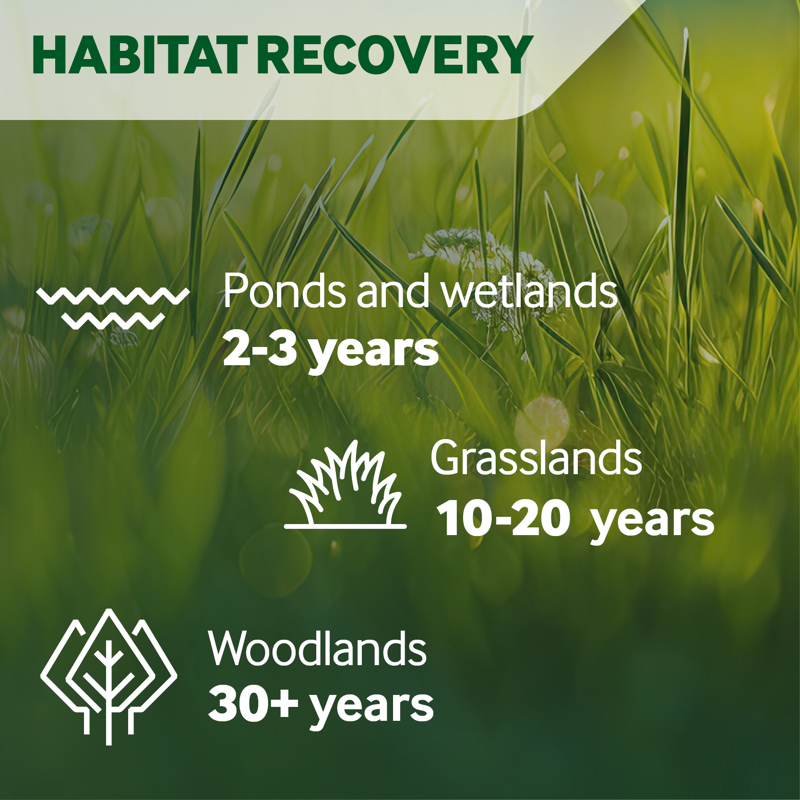
The time it takes to restore or create habitats will vary depending on the specific ecological conditions, the techniques used, and the desired outcomes. Some habitats may recover relatively quickly, while others may require years or decades to fully develop. Depending which habitat type you’re trying to unit, you need to be mindful of the time lag as nature runs its course; ponds and wetlands can take two to three years to become well-established, grasslands 10-20 years, and woodlands 30+ years.
As of January 2020, any improvements made to natural habitats or new habitat creations can qualify for biodiversity net gain (BNG) agreements..
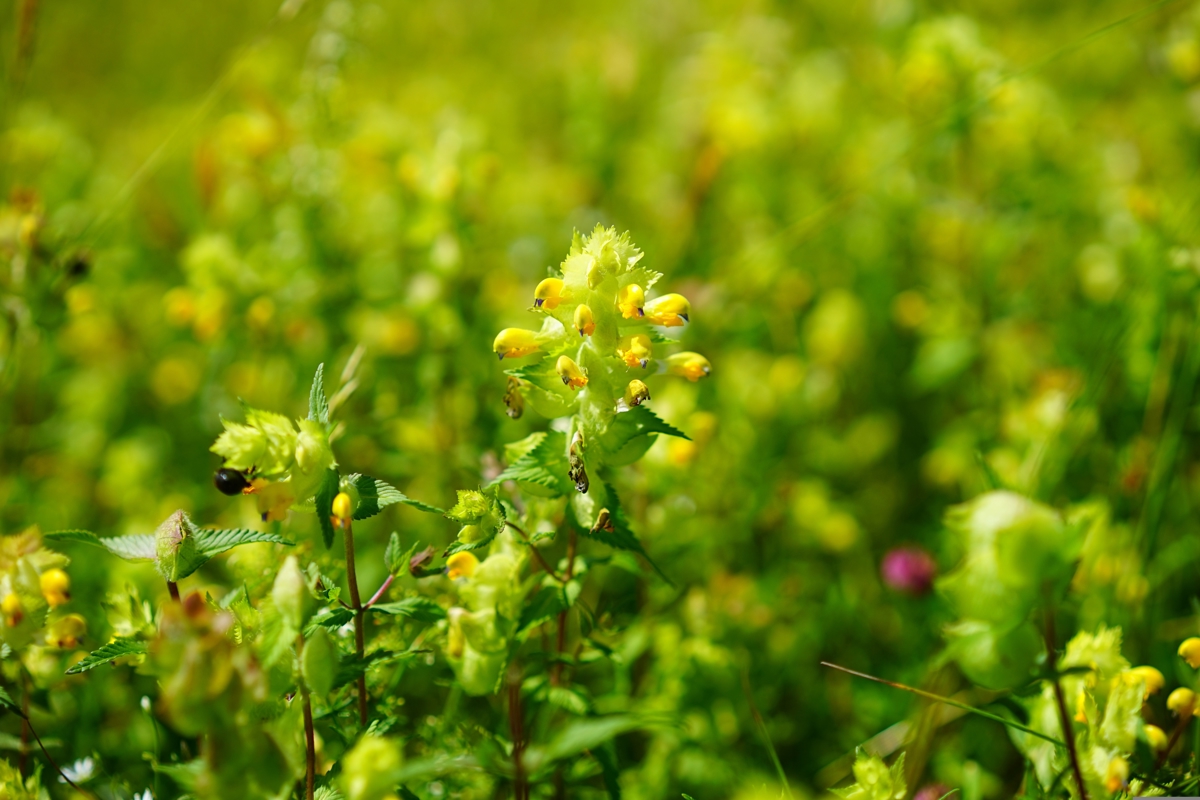
Our ecology team is currently supporting a client to create habitat banks to sell and it’s expected to take around 12 years. Some of the seeding, particularly yellow rattle, suppresses dominant grasses to allow space for wildflowers to grow. Creating and profiting from habitat banks is a long-term process, and it’s important to be conscious that nothing is set in stone. You can gear up to sell a certain number of units, but only time will tell if the species will actually take and restore the land into sellable units. Some re-seeding and other interventions are required in the early years following the initial restoration to keep the process on track.
It’s important to determine which species will thrive in your habitat bank. Depending on the type of soil, different species will take, so it’s best to seek support from experts in your habitat type and location. Try to use local seed sources and reflect local plant communities.
While the requirement was previously a minimum of ten species of grasses and flowers in a one-metre quadrat, it’s now a minimum of ten wildflower species. This is why semi-parasitic species like yellow rattle are vital in developing habitat banks, as it draws nutrients from the roots and weakens the grass, suppressing growth and allowing space for wildflowers to flourish. It’s worth considering pre-ordering yellow rattle if you’re aiming to restore your land as resources are currently very limited.
To sell habitat units, the landowner must secure the habitat bank through conservation easements or planning obligations and register it with the local planning authority. Liaising with the planning authority is crucial in kickstarting your project and you’ll need to allow for a 3-4 month pre-planning process to ensure your development meets their requirements. Most habitat banks can take 18 months to come forward.
If you’re uncertain about the potential of some sites, be cautionary about which uplifts you can bank on and sell. This process is still bedding in now that BNG legislation is in place and the number and value of the units created ultimately depends on your results on the ground.