500,000 km2
of forest canopy covered for predictions
No Content Set
Exception:
Website.Models.ViewModels.Components.General.Banners.BannerComponentVm


Sustainability
Energy transition
The Clean Energy Regulator (CER) is Australia’s government body responsible for administering legislation to accelerate carbon abatement across the nation. As part of its remit to reduce carbon emissions and increase the use of clean energy, the CER oversees the Australian Carbon Credit Unit (ACCU) Scheme. This scheme incentivises projects that avoid the release of greenhouse gas emissions or remove and sequester carbon from the atmosphere, such as carbon farming and forest regeneration activities that store more carbon.
The ACCU Scheme awards carbon credits to businesses and land managers for activities such as reforestation and native forest regeneration on Carbon Farming Project Areas (CFPAs). As ACCUs are a tradeable financial product, CFPAs are thoroughly evaluated by the regulator to determine their eligibility for earning credits. Participants can earn an ACCU credit for every tonne of carbon dioxide equivalent (tCO2-e) emissions stored or avoided by a project. This can be achieved through land management practices such as Human-Induced Regeneration (HIR) which grants credits based on the success of forest regeneration efforts.
Assessing an HIR project relies on multiple lines of evidence to support claims that adequate recruitment is taking place, and areas are on track to achieve forest cover. To enhance its compliance monitoring capabilities, the regulator required additional, timely data on forest regeneration resulting from HIR activities to validate the carbon abatement claims made under the ACCU Scheme. RPS was engaged to develop a solution that leverages advanced geospatial technologies, integrating airborne LiDAR and machine learning, to predict forest canopy cover and track reforestation progress across CFPAs using up-to-date satellite imagery.

RPS developed a machine learning model using airborne LiDAR (Light Detection and Ranging) data to predict forest canopy cover based on available satellite imagery. This solution required several steps:
• Airborne LiDAR capture over a 464 km2 sample within the 500,000 km2 study area.
• The LiDAR data, combined with satellite imagery from the capture area, was used to train the machine learning model.
• The model was used to predict forest cover from satellite images between 2000 to 2023. Predictions were delivered to the regulator as georeferenced images (GeoTIFF), ready for further geospatial analysis. These represent the level of established forest canopy cover that align with real-world locations on a map, allowing the images to be used in mapping software.
• Ground validation of LiDAR data and vegetation surveys were also conducted by RPS to ensure the veracity of LiDAR data captured.
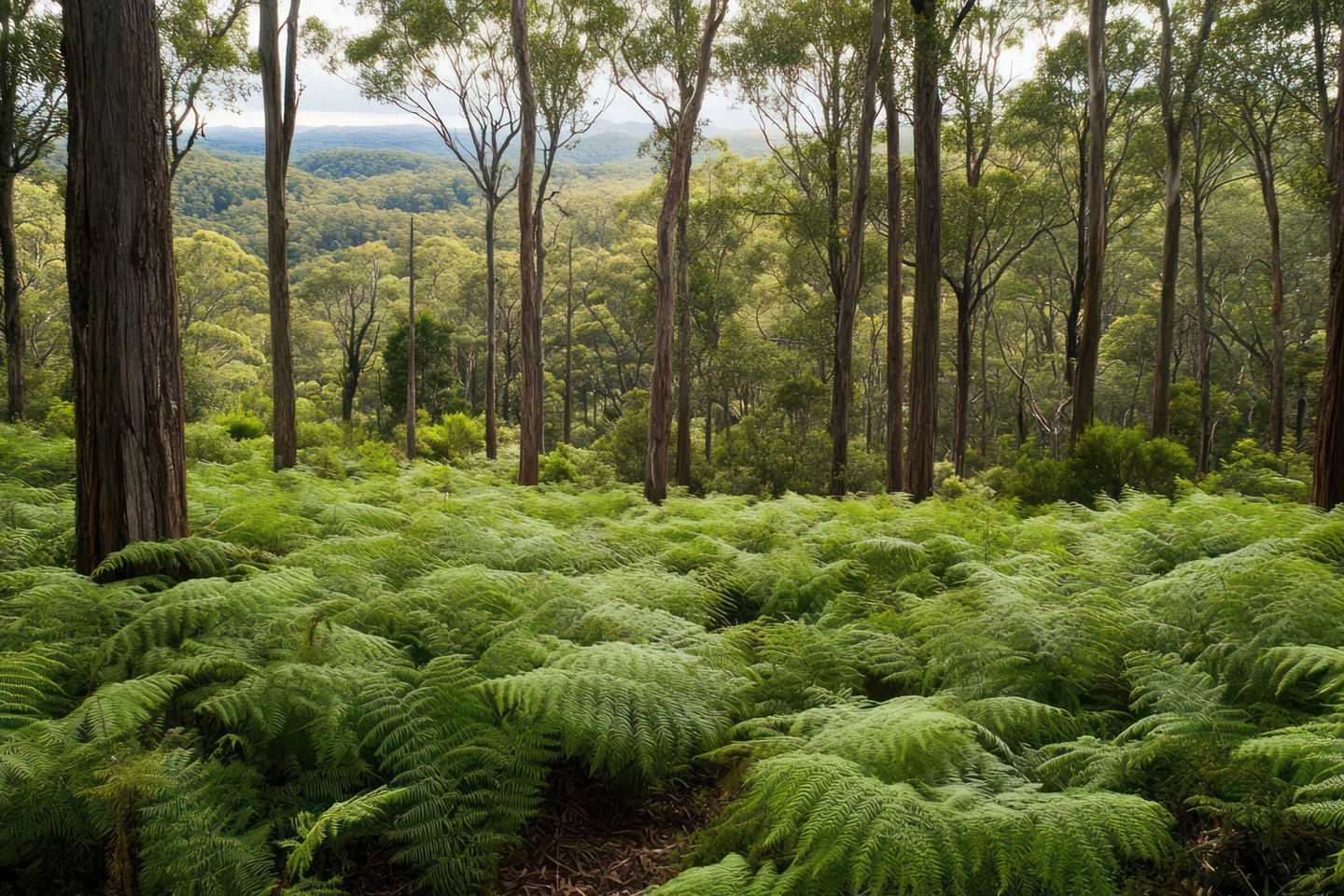
RPS’ solution provided the Clean Energy Regulator with high-quality, geospatially referenced canopy cover predictions that can be easily integrated into the assessment of Carbon Farming Project Areas. This new data-driven approach provided an additional, high-quality product to more effectively validate carbon abatement claims, resulting in more robust compliance monitoring and enhanced support for the ACCU Scheme’s objectives of reducing, offsetting, and tracking project emissions.
Additionally, the integration of timely geospatial data into the ACCU Scheme’s framework improves assessment efficiency, providing faster and more accurate evaluations of a project’s reforestation program and carbon offsets. Further, this solution supports the long-term goals of reforestation, forest protection, and climate action through the ACCU Scheme.

500,000 km2
of forest canopy covered for predictions
24
years of satellite imagery collated (2000 to 2023)
464 km2
of airborne LiDAR capture to generate training data
51 GB
of data provided as georeferenced images (GeoTIFF), generated by model outputs
1
year (project timeline)