Ornithology
We provide expert ornithology services, from bird surveys to mitigation, ensuring project success while protecting avian species and habitats across offshore and onshore environments.
No Content Set
Exception:
Website.Models.ViewModels.Components.General.Banners.BannerComponentVm

No Content Set
Exception:
Website.Models.ViewModels.Blocks.PageBlocks.BillboardBlocks.InlineBillboardBlockVm
With over 25 years of experience, Martin has worked on more than 70% of UK offshore wind projects and has been involved in markets across Australia, North America, and Europe. His expertise spans various infrastructure projects, including road, rail, solar, onshore wind, nuclear, and wave and tidal energy. Martin's unique blend of knowledge in both the energy sector and conservation brings a well-rounded approach to his work.
In his spare time, Martin is a season ticket holder at Arbroath, a Scottish football club. Even during matches, he keeps an eye out for birds around the coastal ground, often spotting herring gulls looking for scraps from half-time pies, oystercatchers sheltering on the pitch during stormy days, and once even noticed a tired and disoriented migrant goldcrest on the terraces with the fans on a foggy October day.

During our interview, we asked Martin about his aspirations for his team and how demand for ornithology services has changed over his career.
Ornithology has become a risk to development particularly in the renewables market. Having sound accurate information and defendable solutions packaged together is key, but they need to be understandable and achievable.
Over the years ornithology has become incredibly complicated and number centric. Blending this with field knowledge and a pragmatic approach will hopefully benefit all parties.
I hope to bring a pragmatic approach to problem solving to support clients and regulators in the assessment process while reducing risks and impacts.
’Location, Location, Location’ should be the mantra, and largely is. You need to weigh up all factors and wildlife is one that has risen in terms of importance and consent risk in recent years. Not every bird will hinder a development but you need to go through that thought process before legal issues arise which can harm developers interests.
We asked Martin to give us some insight into how he tackles projects and how his experience shapes his approach.
Birds are important and have a value, but I can now quickly work out what is going to be a problem. With years of experience, biological understanding and knowing how birds are listed in conservation terms you can rapidly focus in. Knowledge of range, distribution and behaviour can cut through lots of questions early on and allow a pragmatic answer for parties to be available much quicker.
I focus on being pragmatic and open. Nobody wants to be faced by a wall of numbers or a never ending spreadsheet. So, translating complex numerical data and models into clear, simple language eases understanding for all parties. This approach leads to fewer frustrations and happier regulators and clients. We need to work together more, sharing thoughts and discussions rather than maintaining an adversarial relationship.
And finally, Martin concluded our interview by sharing some industry insights and predictions for the future of ornithology.
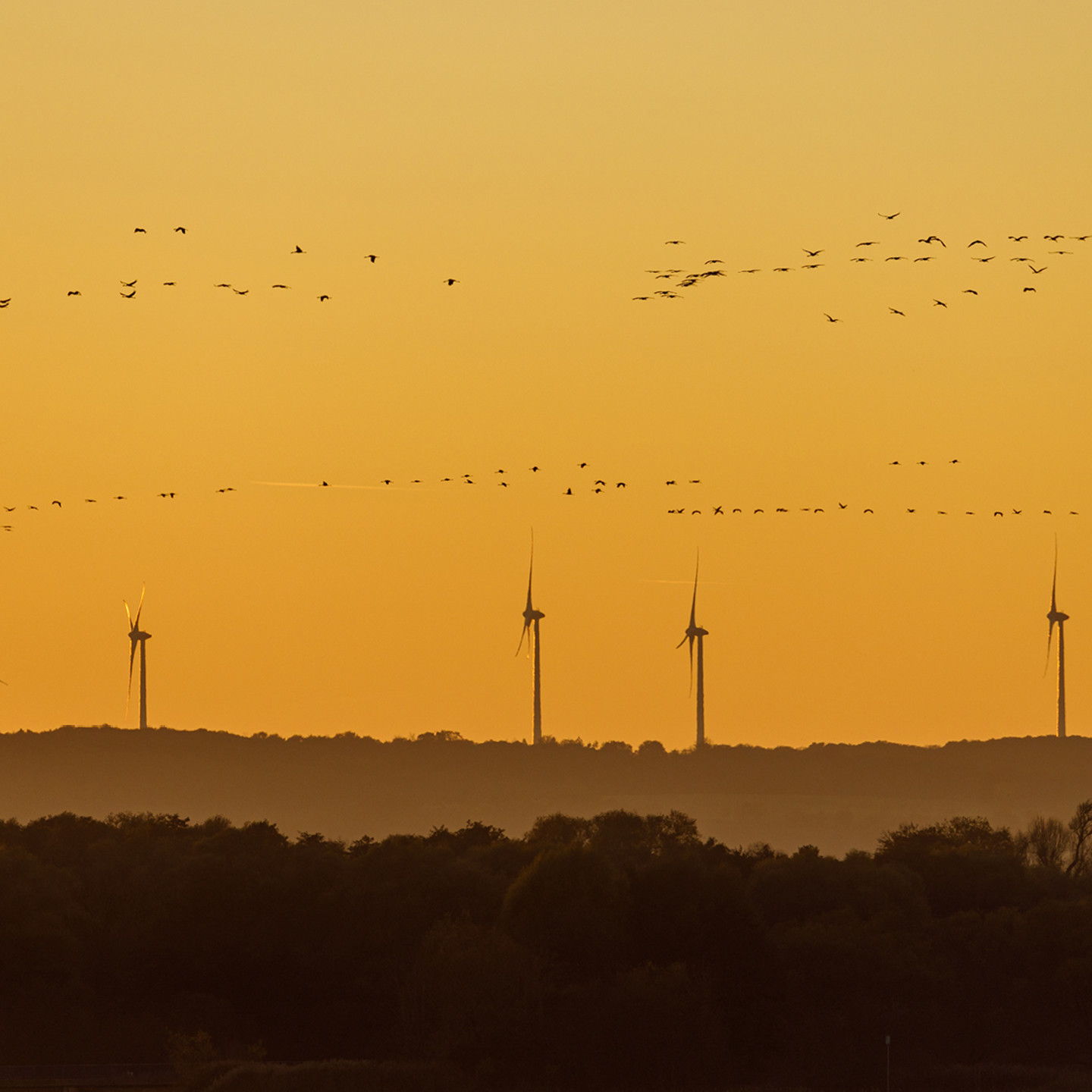
Terrestrial surveys are generally easier, especially during breeding seasons when issues are potentially greatest. Coastal and sea surveys are more challenging as birds are constantly moving. Wind farms add a three-dimensional aspect to the problem, considering not just longitude and latitude but also height. If a bird is flying at height , and on the move, they are vulnerable which causes problems to compound. This complexity makes wind farm assessments more than just a box-ticking exercise.
Camera systems have been around for a long time, but the introduction of automation and AI should speed up data processing and provide answers much faster. Data delays have been a thorn in the industry side for years and shortening that will help enormously. Quicker decisions benefit all parties, and improved cameras will give us better insights into bird activity around turbines.
"How high do birds fly?” It sounds like a basic question, but there is still no simple answer. A major challenge is determining how high birds fly. It's not a constant, as birds are always on the move, making accurate recording difficult. Back in 2015, Scottish Government put out a tender to seek answers to the question and all that did was raise more questions. Factors like weather, food availability, species, and tide all play a role. There is no simple numeric output, which causes lots of headaches.
No Content Set
Exception:
Website.Models.ViewModels.Blocks.PageBlocks.CardBlocks.KeyContactsCardBlockVm
