
Vikas Sharma
Director - Management Consulting
No Content Set
Exception:
Website.Models.ViewModels.Components.General.Banners.BannerComponentVm

As artificial intelligence becomes embedded in everyday work, organisations need to rethink some of the assumptions that have traditionally shaped workforce planning.
Historically, workforce planning has often focused on roles and headcount: how many people will we need, which roles will they perform and where will those roles sit?
AI introduces a different set of questions.
What work actually needs to be done? Which tasks can be augmented by AI? Which activities still rely most heavily on human judgement and interaction? And what capabilities will people need to work effectively alongside new technology?
This shift means workforce planning can no longer be viewed only through the lens of organisational structure or job titles. It increasingly requires a deeper understanding of work itself, how that work is changing and how people can continue to adapt as technology evolves.
A role is made up of many different tasks.
Some may be repetitive or process driven. Others depend on judgement, problem solving, creativity or an understanding of organisational context.
As AI becomes part of daily work, organisations have an opportunity to look more closely at this mix rather than treating a job as a single unit.
The question is not simply whether a particular role will change. It is which parts of the work can be supported or augmented by AI, which tasks remain better suited to people, and how the balance between the two may evolve over time.
Taking this approach can provide a more practical basis for workforce planning because it starts with the work that needs to be delivered, rather than assuming today's role structures will remain unchanged.
It also creates an opportunity to think more deliberately about where human capability creates the most value.

If the work is changing, the capabilities organisations need will change with it.
Traditional workforce planning can rely heavily on periodic plans and static inventories of existing skills. But when technology and business needs are evolving more quickly, organisations need a more dynamic understanding of the capabilities their people have today and how those capabilities might develop.
This means looking beyond a simple list of current skills.
It also means understanding adjacent capabilities: the skills, experience and strengths people already have that could allow them to move into different or evolving areas of work.
Someone may not currently perform a particular task or sit within a particular role, but they may already have capabilities that provide a strong foundation for reskilling or redeployment.
Looking at capability in this way can help organisations identify where people may be able to grow into changing work rather than focusing only on the gap between current and future job descriptions.
One of the most important questions for leaders is what they are actually trying to achieve through AI adoption.
The opportunity is not simply to automate more work. It is to redesign work deliberately.
AI can be used to reduce repetitive, lower-value tasks and allow people to spend more time on the areas where human capability matters most.
That may include judgement, problem solving, stakeholder engagement, and other work that depends on relationships and context.
This creates a different conversation about productivity.
Rather than asking only where technology can remove effort, organisations can also ask where it can create space for people to focus on more valuable activity.
That means thinking about how work should be designed, not simply how existing processes can be automated.
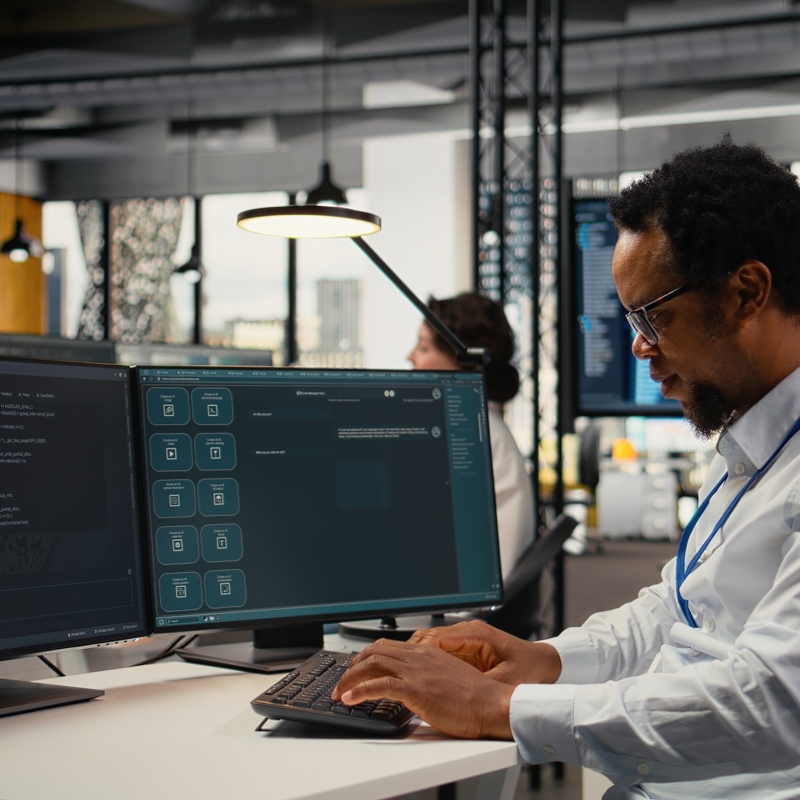
For leaders, this makes AI adoption as much an organisational challenge as a technological one.
AI strategy, workforce planning and capability development cannot be treated as separate conversations if organisations want to understand how work will change in practice.
Introducing new technology without considering its effect can leave organisations with a disconnect between the tools they are adopting and the workforce needed to use them.
Equally, workforce plans that do not consider how AI may reshape work risk becoming outdated as ways of working continue to evolve.
Bringing these areas together gives organisations a clearer view of what work will need to be done, how that work could change and what capabilities people will need to contribute effectively.
There is unlikely to be a point where workforce planning is simply “finished”.
As technology and organisational priorities continue to evolve, the capabilities required will evolve with them.
The challenge for organisations is therefore not only to plan for a particular future workforce. It is to build an approach that helps the workforce continue adapting as needs change.
That starts with understanding work at a more detailed level, identifying where AI can augment tasks, recognising the capabilities people already have and creating pathways for those capabilities to evolve.
For leaders, the shift is ultimately from asking only “How many people and roles will we need?” to asking “What work needs to be done, and how do we prepare people to do it effectively alongside AI?”
Organisations that can make that shift will be better positioned to capture the productivity benefits of AI while continuing to develop a workforce that can adapt as technology and business needs evolve.
Director - Management Consulting